
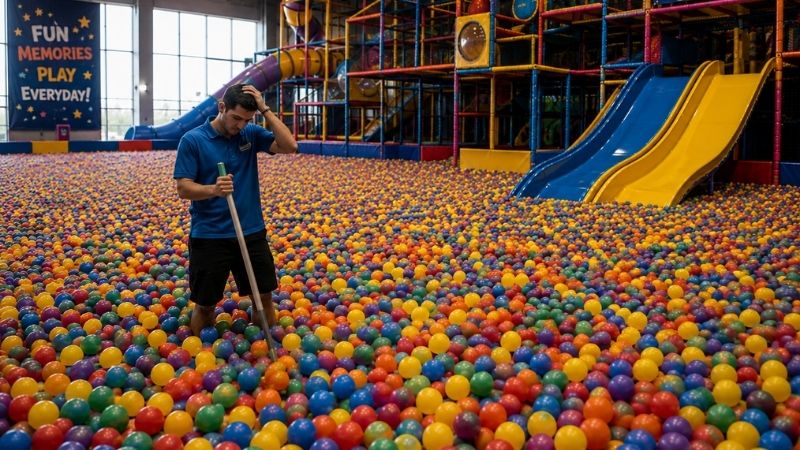
When you are in the exciting design and development phase of an indoor playground, nothing looks quite as spectacular on the 3D renders as a massive, colorful ball pool. A large ball pit screams “ultimate fun.” To prospective investors and excited parents, it feels like an absolute must-have. It triggers a wave of nostalgia for parents who remember the joy of burying themselves in plastic spheres, and it acts as an instant, vibrant visual anchor that draws kids in from the moment they step through the door.
But there is a massive gulf between design-phase enthusiasm and Monday-morning operational reality. Once the grand opening glitter settles, that beautiful sea of primary colors often morphs into the single biggest headache on your retail floor.
Before you commit valuable square footage to a giant pit of plastic, it is crucial to look past the “wow” factor and examine the cold, hard operational truths.
The Top 8 Reasons to Skip the Ball Pool
- Sanitation & Hygiene Nightmares
With 25,000 balls, you are looking at millions of square inches of plastic surface area that act as a magnet for sweat, saliva, and bodily fluids (urine, vomit, and worse). Deep-cleaning them is a biohazard challenge that requires specialized, expensive ball-washing machinery or grueling, ineffective manual scrubbing. - Astronomical Labor & Maintenance Costs
Keeping a ball pit safe and sanitary is incredibly labor-intensive. Staff must regularly empty the pit, disinfect the floor beneath it, wash and dry the balls, and sort through to discard crushed or damaged plastic. This translates to high recurring payroll costs and frequent operational downtime. - Severe Liability & Safety Risks
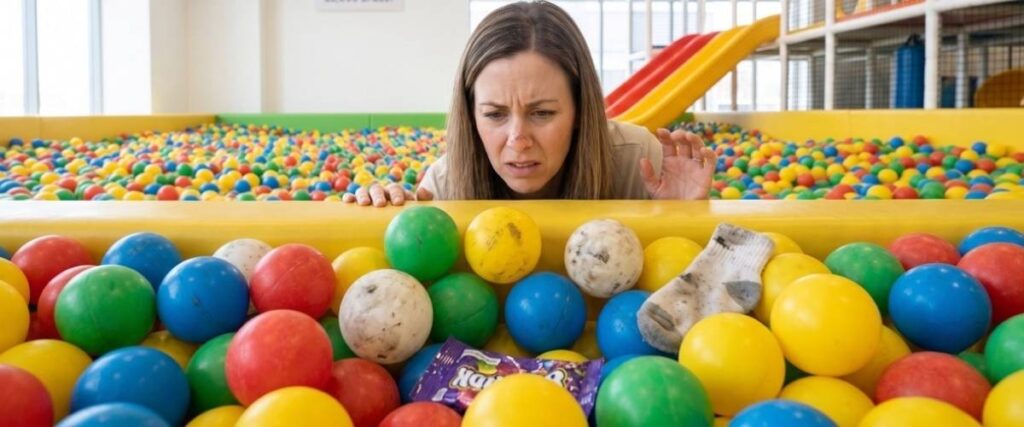
Ball pools are notorious for hiding hazards. Lost keys, hairpins, broken plastic, band-aids, or worse settle at the bottom, risking cuts and punctures. Furthermore, smaller children can easily get buried, collided with, or injured out of the sightline of supervising staff and parents.gh recurring payroll costs and frequent operational downtime. - Poor Space-to-Revenue Efficiency (Opportunity Cost)
A large-ball pool occupies an equally large physical footprint. From a profitability standpoint, that valuable square footage could be used for much higher-margin attractions—such as ninja obstacle courses, interactive ball-play, or private party rooms—which offer higher throughput, lower maintenance, and better direct monetization. - The “Parent Ick” Factor & Brand Damage
Modern parents are highly sensitive to cleanliness. If a ball pit looks dusty, smells stale, or has visibly crushed balls, it triggers instant parent anxiety. A single negative online review or viral post about an unsanitary ball pit can permanently damage an indoor playground’s local reputation and tank repeat business.
- Constant “Ball Bleed” and Ongoing Replacement Costs
Balls do not stay in the pit. Kids actively throw them, kick them, and smuggle them to other areas of the playground. Dozens are crushed daily by enthusiastic play or heavy foot traffic. Replacing thousands of squished or missing balls every year introduces a sneaky, recurring capital expense that quietly eats away at your profit margins. - Pest Attraction and Debris Accumulation
Despite strict “no food” rules, kids inevitably sneak snacks, juice boxes, and candy into the play area. This debris sinks straight to the bottom of the pit. Combined with the dark, warm, and undisturbed environment beneath the balls, you are accidentally creating an absolute paradise for mice, ants, and other pests. - Accessibility and Inclusivity Barriers
Modern playground design heavily emphasizes inclusivity. Ball pools are notoriously non-inclusive. Children with physical disabilities, mobility challenges, or sensory processing sensitivities find them nearly impossible or entirely overwhelming to navigate. Investing in an attraction that alienates a portion of your customer base is a missed business opportunity.
Redefining Your Footprint: High-Yield Alternatives
So, if you ditch the ball pool, what do you do with that massive physical footprint? The modern indoor play industry has shifted toward high-yield, low-maintenance attractions that offer a much faster return on investment (ROI).
Consider replacing that high-maintenance pit with a mini ninja warrior course or high-energy tag arena appealing to a broader age demographic (including older, higher-spending kids) while requiring minimal labor to clean. Alternatively, a pretend play area or playful learning component to attract daytime visits.
Even better, that footprint could house additional private party rooms—historically the highest revenue-generating asset per square foot in any family entertainment center.
The Bottom Line:
While the nostalgic pull or initial wow-factor of a 25,huge-ball pool is incredibly strong during the early design phases, the modern playground owner must prioritize longevity, safety, and profitability. By trading the high-maintenance ball pit for smart, scalable attractions, you save your staff from endless scrubbing and set your business up for sustainable financial success.
For a no-obligation discussion about your project design goals, please do reach out to us anytime, or request a design proposal from the North American professionals at Northwest Play.