
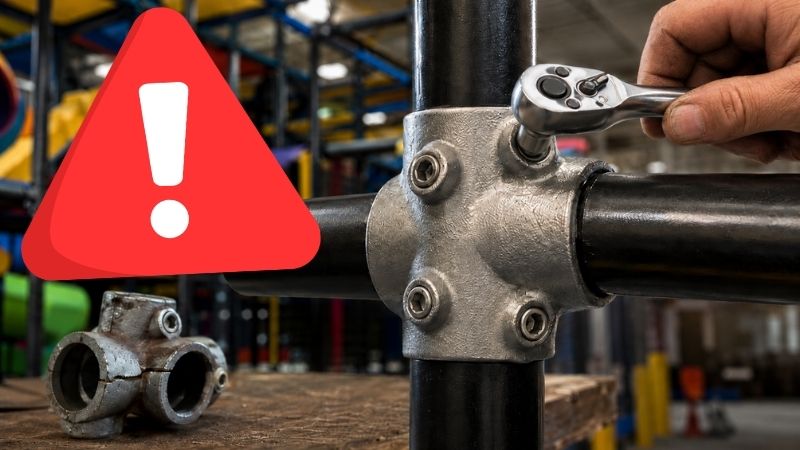
In an indoor play structure, the fun is easy to see. Kids see slides, bridges, tunnels, climbs, rollers and foam-wrapped adventure. Parents see color, excitement and birthday-party energy. Operators see revenue potential.
But underneath all of that fun is the part most buyers never think to ask about: the steel frame, the fittings, and the clamps holding the entire structure together.
Those small metal components are not decorative. They are the connection points that turn pipe into grids, grids into levels, and levels into a safe, durable commercial play structure. In other words, fittings are where the playground either earns its strength—or quietly starts creating maintenance problems.
ASTM F1918
A commercial indoor playground is not a toy. ASTM F1918 is the safety performance specification for soft-contained play equipment, with the stated purpose of reducing the potential for life-threatening and debilitating injuries for users ranging from young toddlers to older children. That does not mean every playground is built the same.
It means serious operators should care deeply about how the structure is engineered, connected, installed and maintained.
One of the clearest quality differences is found in the clamps themselves.
On the surface, a fitting is a fitting, is a fitting. They may look similar, they may even hold pipe together well enough for a year or two.
But once the structure is exposed to thousands of climbing, bouncing, twisting, jumping children, the quality of that connection begins to matter very quickly. From our inspection and repair service, we have seen first-hand how the use of low-cost off-shore fittings dramatically affect the long term strength and support required for safe operations.
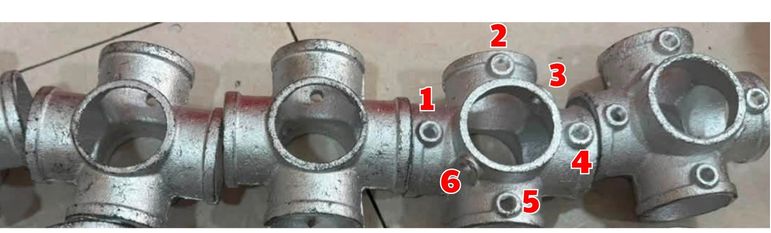
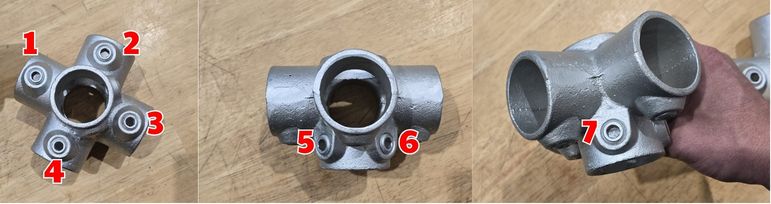
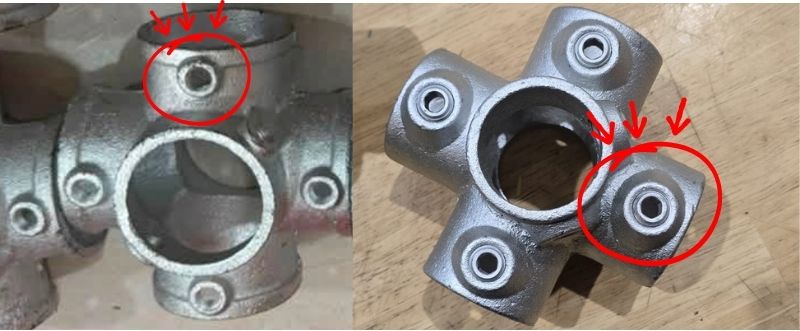
Off-shore product often use shorter sleeve lengths and fewer set screws. In the comparison above, you can see that the Northwest Play fittings have a total of (7) set screws and twice the sleeve length, compared to (6) on the other product. The screws are set back from the very edge and mounted of raised bosses.
Set Screw Design: A Point of Failure
In a quality clamp, the set screws are positioned on thicker raised steel bosses, giving the screw more thread engagement and allowing it to tighten properly into the pipe. More thread depth means better holding power and a stronger mechanical connection.
In lower-grade fittings, the set screws are often shorter, positioned closer to the end of the sleeve, and supported by thinner casting material.
That limits how securely the screw can bite into the pipe before the clamp itself becomes the weak point and begins to crack.
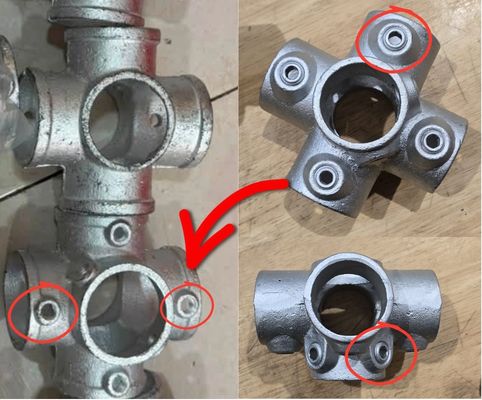
Here you can see the difference in set screw depth and position right at the edge of the fitting. The NWP fittings provide greater set screw thread and more “sleeve length”.
Sleeve Length: Structural Strength and Stability
To provide the strongest, safest structure you need to maximize the pipe engagement inside the sleeve. That means more of the pipe is captured inside the clamp before the set screw is tightened. More sleeve length provides a stronger connection area, better alignment, (holds the pipe level) and a more secure grip.
Short sleeve fittings, especially when the set screws are located too close to the edge of the clamp, reduce the amount of pipe inside the fitting and place stress closer to the casting edge.
Over time, that will contribute to loosening, cracking, wear and ongoing maintenance headaches and the potential for structural failure.
Not Just Hardware
With cheaper fittings, shorter set screws, thinner casting, or screws placed too close to the edge of the clamp, the screw may strip, loosen, or push back against the pipe instead of locking securely into it. Over time, that pressure can weaken the fitting, crack the housing, and turn a hidden connection point into a maintenance and safety problem.
Northwest Play does not treat fittings as “just hardware.” They are structural connection points. More screws, better screw placement, deeper sleeves, stronger casting material and professional installation all contribute to a more secure frame. That matters because indoor play structures experience constant dynamic loading.
Children do not use playgrounds gently. They climb, shake, swing, lean, pull, push and test everything, usually while laughing and ignoring the very concept of engineering.
This is why material quality cannot be separated from safety.
Price, Price, Price…
As you see, there are many layers to an indoor play structure; fittings and clamps, steel pipe, wood decks, foam, vinyl and netting all offer opportunity to cut corners and product quality.
Cheap fittings can become expensive very quickly. Loose connections lead to service calls. Cracked clamps lead to safety issues and downtime. Downtime affects parties, admissions and customer confidence. Worse, structural issues create liability exposure that no operator needs. The purchase price may look attractive at the beginning, but the real cost of a playground is measured over years of operation.
For operators, this becomes both a business decision, and a safety decision. This is where Northwest Play brings real value.
Northwest Play structures are designed, built and installed with long-term commercial operation in mind. The difference is in the details most buyers never see at first glance: stronger clamps, deeper pipe engagement, more secure set screw placement, better materials, professional installation, and local accountability and warranty after the sale.
Because in the indoor play business, the fittings may be hidden under the padding—but the quality never stays hidden for long.